SSO Integration with 3rd-Party WebApps
Entra ID-based Single Sign-On integration for Enterprise Application access.
Implemented: April 2026
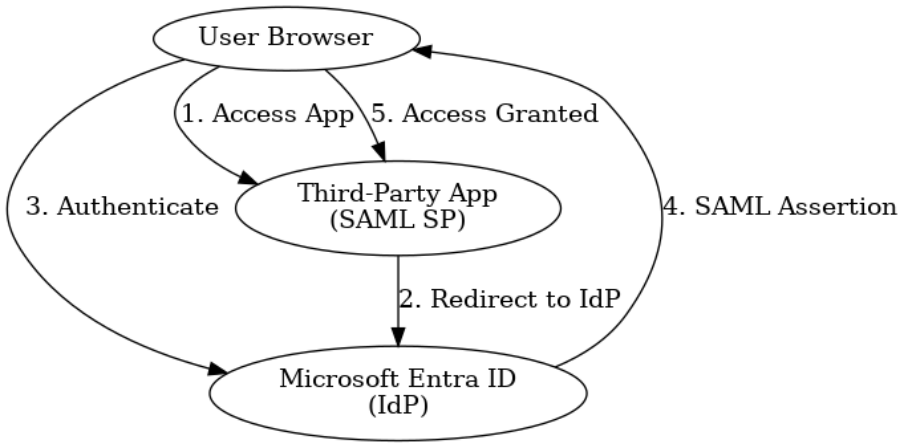
Context
Hybrid cloud environment using Microsoft Entra ID as the central Identity Provider. A third-party SaaS application required secure integration with the organisation’s existing identity platform.
Problem Statement
The application relied on standalone credentials, leading to fragmented access control, poor visibility, and increased risk of credential misuse.
Objective
- Centralise authentication via Entra ID
- Implement SAML-based SSO
- Improve security and user experience
- Enable consistent access governance
Solution
Designed a SAML 2.0 federation model with Entra ID as the Identity Provider and the application as the Service Provider.
This approach ensured:
- Centralised authentication policies (MFA, conditional access)
- Standardised identity flow
- Reduced reliance on application-managed credentials
Implementation Strategy
- Assessed application SAML capabilities and required attributes
- Configured SAML trust (Entity ID, ACS URL, certificates)
- Implemented claim mapping and group-to-role logic
- Tested authentication flows and session handling end-to-end
Engineering Considerations
- Balanced seamless login with enforcement of security controls
- Ensured minimal exposure of identity attributes
- Managed differences between IdP and SP session behaviour
Key decision:
Maintain all authentication logic within Entra to ensure auditability and control.
Tech Stack
Entra ID • SAML • HTTPS • Identity Federation
Outcome
- Eliminated separate credentials for the application
- Centralised identity and access control
- Improved visibility via Entra sign-in logs
- Reduced risk of unauthorised access
Summary
Delivered a secure SAML-based SSO integration that centralised authentication, reduced risk, and aligned the application with enterprise identity standards.