AWS Transit Gateway Deployment for Multi-Account VPC Connectivity
Designed and implemented a centralized AWS Transit Gateway architecture to provide secure, scalable connectivity across multiple AWS accounts and VPC environments.
Implemented: November 2020
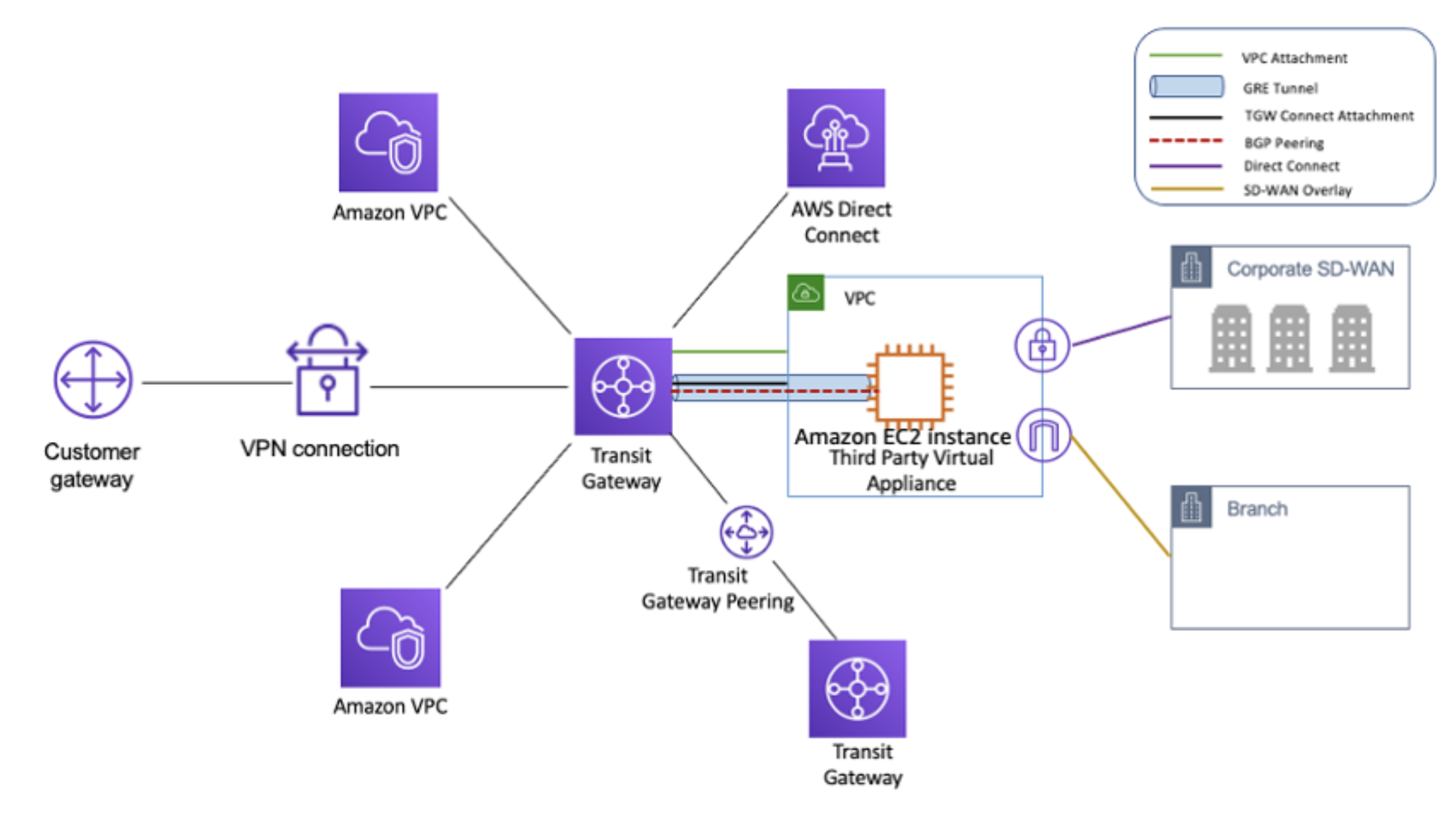
Problem
The organization operated multiple AWS accounts supporting different business workloads, environments, and application teams. As the cloud footprint expanded, managing connectivity between VPCs became increasingly complex.
Traditional VPC peering introduced scalability limitations, operational overhead, and routing complexity. The business required a centralized networking architecture capable of supporting secure inter-VPC communication while maintaining network segmentation and compliance controls.
Solution
Designed and implemented an AWS Transit Gateway (TGW) architecture to act as a centralized routing hub across multiple AWS accounts and VPCs.
AWS Resource Access Manager (RAM) was used to share the Transit Gateway across accounts within the AWS Organization, allowing VPC attachments to be managed centrally while maintaining account-level ownership of workloads.
Custom Transit Gateway route tables, attachment associations, and route propagations were configured to control traffic flow between environments. The design enabled secure communication between approved workloads while preventing unnecessary lateral movement between isolated environments.
The architecture significantly simplified network management by replacing complex point-to-point connectivity with a hub-and-spoke model.
Architecture
- AWS Transit Gateway served as the central network routing hub.
- Multiple AWS accounts hosted independent application workloads and VPCs.
- AWS Resource Access Manager (RAM) enabled cross-account Transit Gateway sharing.
- VPC attachments connected individual application environments to the Transit Gateway.
- Dedicated Transit Gateway route tables controlled connectivity and segmentation.
- Route propagation and attachment associations governed traffic flow between environments.
- Security groups and network controls enforced workload-level access restrictions.
Outcome
The implementation established a scalable multi-account networking architecture capable of supporting continued cloud growth.
Centralized routing reduced operational complexity, improved network governance, and provided a secure foundation for future application onboarding.
Key Takeaways
- Transit Gateway simplifies network management in multi-account AWS environments.
- Centralized routing improves governance and operational efficiency.
- Route table associations and propagations provide granular traffic control.
- Future iterations should incorporate infrastructure-as-code and automated compliance validation.
Reflection
If implementing the solution today, I would deploy the entire Transit Gateway architecture using Terraform, integrate AWS Network Manager for visibility, and standardize connectivity patterns through a dedicated Shared Services networking account.