AWS Control Tower Landing Zone Deployment for Multi-Account Fintech Operations
Designed and implemented an AWS Control Tower landing zone spanning 20 AWS accounts and 17 isolated environments to support secure, compliant, and scalable fintech operations across multiple business units and countries.
Implemented: March 2020
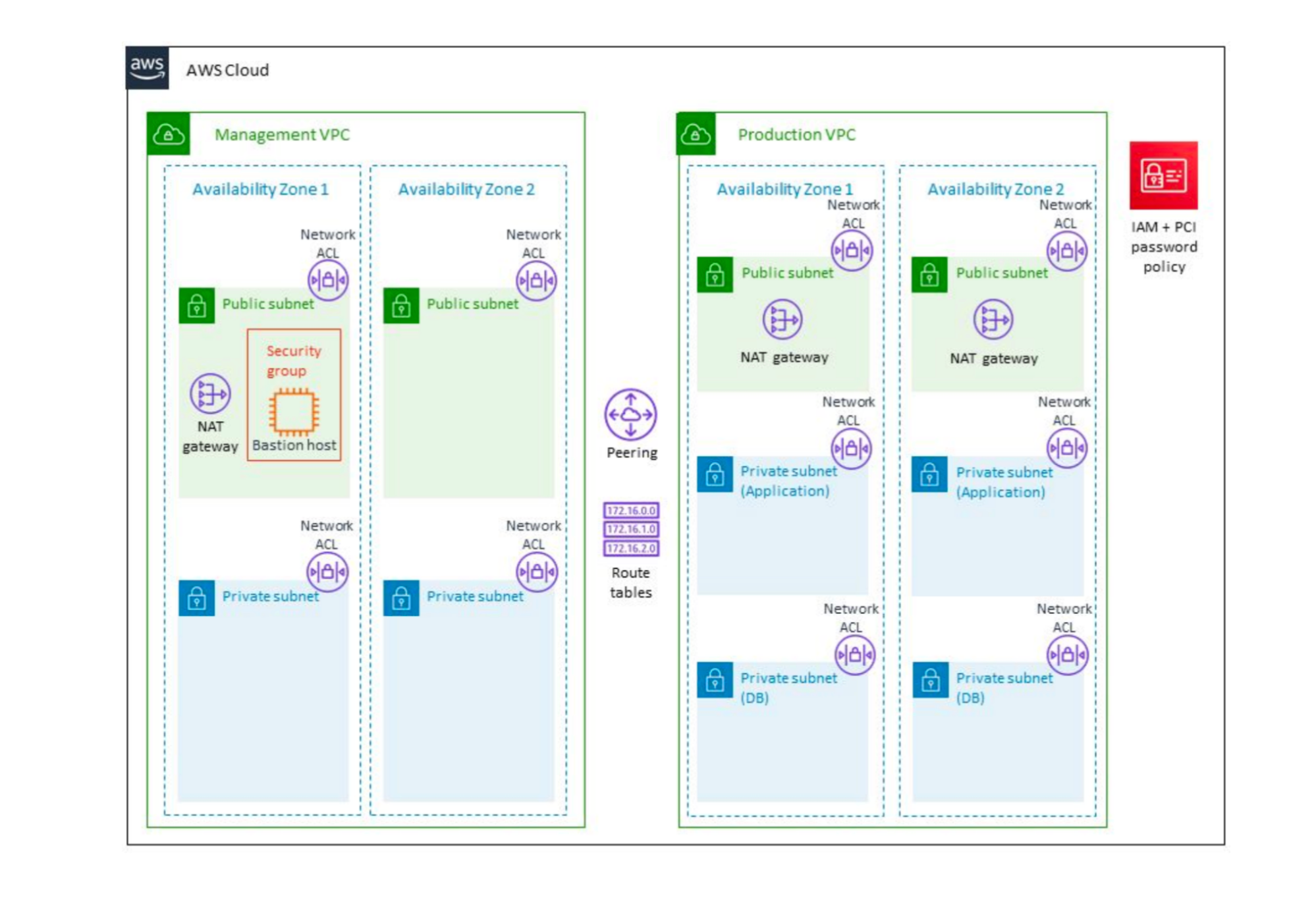
Problem
The organization required a secure and scalable cloud operating model capable of supporting multiple business units, development teams, production workloads, and PCI-DSS regulated environments.
A single-account AWS model would have introduced operational risk, security challenges, limited governance controls, and insufficient isolation between development, testing, operational, and cardholder data environments.
The business needed a centralized cloud governance framework that provided account-level isolation while maintaining centralized management, billing, security oversight, and compliance controls.
Solution
Designed and implemented an AWS Control Tower landing zone architecture based on AWS Organizations and a multi-account operating model.
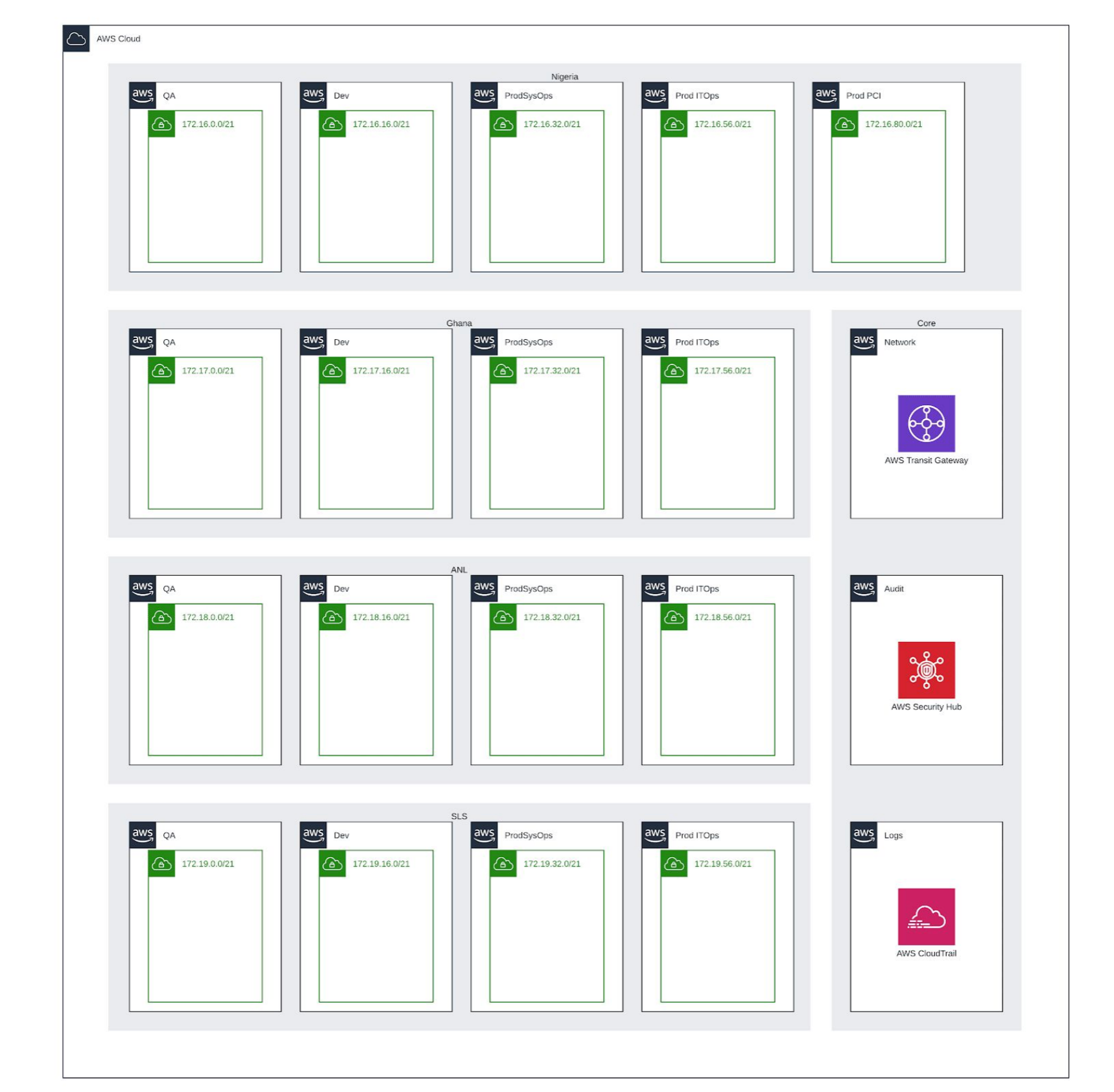
The platform consisted of 20 AWS accounts organized into dedicated Organizational Units (OUs) representing business entities and operational functions. Each business unit was allocated isolated environments for Quality Assurance, Development, Production Systems Operations, and Production IT Operations workloads.
A dedicated PCI environment was created within the Nigeria Organizational Unit to support cardholder data processing and PCI-DSS compliance requirements.
Centralized governance services were deployed using dedicated management accounts, including security monitoring, audit controls, centralized logging, networking, and account lifecycle management.
The implementation established a repeatable cloud foundation that enabled secure workload onboarding, simplified governance, and supported future business growth.
Architecture
- AWS Control Tower provided landing zone governance and account orchestration.
- AWS Organizations managed account hierarchy and organizational units.
- Four business OUs were created: Nigeria, Ghana, Kenya, and ANL.
- Each OU contained dedicated QA, Development, Production Systems Operations, and Production IT Operations accounts.
- A dedicated PCI production account was deployed within the Nigeria OU for regulated workloads.
- Centralized Networking accounts managed shared connectivity services.
- AWS Transit Gateway provided network interconnectivity between approved environments.
- Dedicated Audit accounts enforced governance, compliance, and security visibility.
- AWS CloudTrail centralized logging and audit data collection.
- Security Hub provided centralized security findings and compliance monitoring.
Outcome
The implementation established a secure enterprise cloud foundation supporting 17 isolated environments across 20 AWS accounts. The architecture improved governance, strengthened security boundaries, simplified compliance management, and enabled independent workload operations while maintaining centralized control and visibility.
Key Takeaways
- Multi-account architectures provide stronger security and operational isolation than single-account designs.
- AWS Control Tower simplifies governance and standardization at scale.
- Dedicated audit, logging, and security accounts improve compliance readiness and operational visibility.
- Future iterations should incorporate Infrastructure as Code and automated guardrail enforcement.
Reflection
If implementing the solution today, I would extend the platform with AWS Control Tower proactive controls, Terraform-based account provisioning, and automated compliance reporting pipelines to further strengthen governance and operational efficiency.